



Your AUSTEDO XR story deserves
to be seen
Sharing your experience could
help others feel more connected, empowered, and informed.

for Tardive Dyskinesia in Adults
Now Playing:
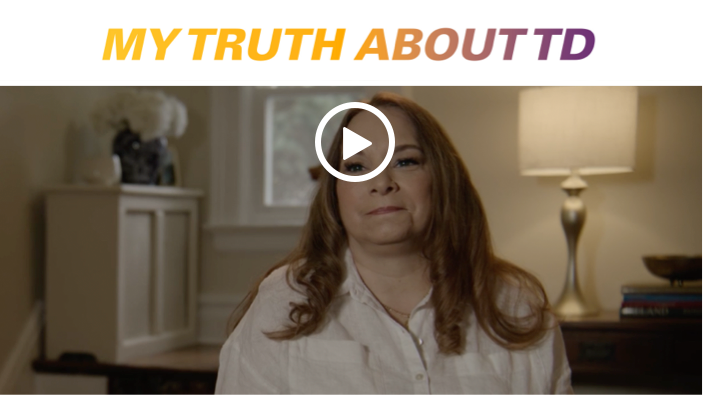
Rachel's story
Hear Rachel, a real person living with TD, share her journey.
View transcript
Becoming aware of TD
Titration benefits
Reaching your dose
Meet Rachel
TD symptoms & diagnosis
Starting TD treatment
On the path to diagnosis
TD treatment and my medications
Getting back to life
Meet Joe
Receiving a diagnosis
Starting TD treatment
Understanding TD
The impact of starting treatment
Long-lasting movement reduction
Rachel’s story
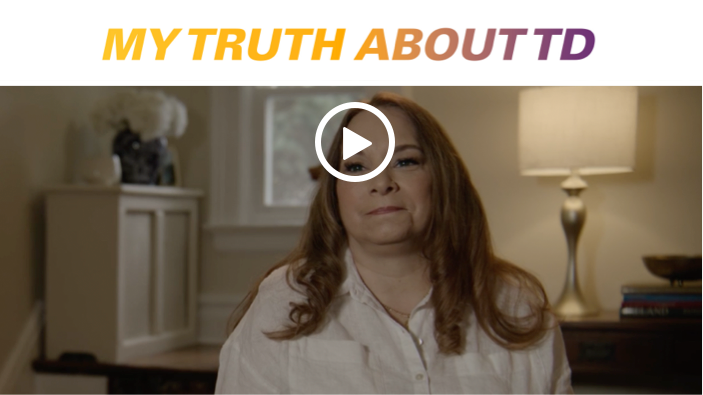
Susan’s story
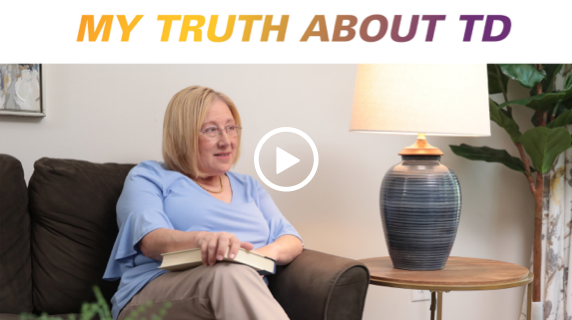
Sherland’s story
Denise’s story

Joe’s story
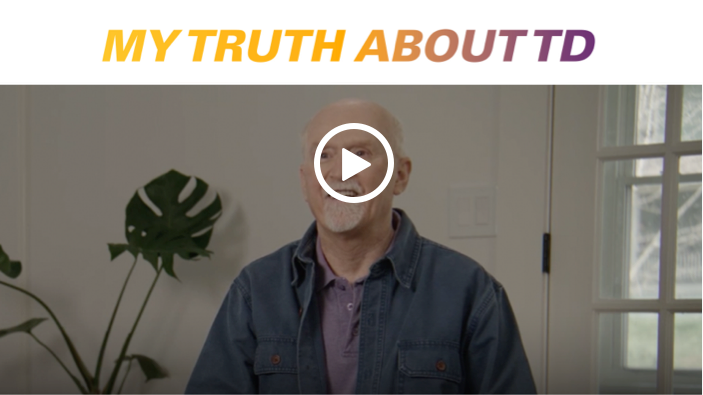
Charlene’s story with Dr Ojha

Rebecca's story with Dr Jesse
Meet Stephanie and Claire

Meet Derrick and Lisa

View transcript
Hi, I'm Rachel. I'm a grandma and a mother. When I was 18, I was diagnosed with schizophrenia. I really didn't have a big, base for, you know, people in my family that understood about schizophrenia and knew about schizophrenia. I just knew that I was sick, and I would spend months in the hospital, and it just went on for years. I went to the doctor, and she prescribed me medication and the medication that she prescribed me, I was on for like, 16 years. I ended up getting drug induced tardive dyskinesia. I didn't know from taking a medication that I could get a disease.
I went to the doctor, and I pleaded with her. I told her, please listen to me. Something's going on with me. My hands are shaking. You know, at that point, my hands were like this. My head was bobbling around like this. I lost the feeling in my legs. My legs wouldn't hold my body anymore, and it just got so bad. I noticed it first in my hands and then and then I started getting very upset when it started going to my face. My tongue was like this. All day, my tongue just kept sticking out of my mouth, sticking out of my mouth. For the longest time, I didn't want to go outside. I was too ashamed to go outside. I was too ashamed to talk to people and be around people because of the movements. They were so embarrassing. That really hurt my feelings was the cruel, cruelness people had towards me, with making fun of me. They had problems with me. Why are you talking like that? You sound drunk. Why? Why is your tongue sticking out? Why are you walking like that? And then they sent me to another doctor. And he noticed that I had the tardive dyskinesia. When I was diagnosed with the tardive dyskinesia, I was devastated. It finally gave a name to something that I didn't know that could possibly happen to me from taking medication that I was prescribed.
When I started taking the AUSTEDO, I started noticing first my hands started smoothing out where they weren't tapping so much. My fingers weren't tapping so much, and then they started just going straight. They just leveled out. Then I noticed that my mouth movements, my tongue started to stay in my mouth more. My doctor was able to find the right dosage for me of the…the XR. The AUSTEDO XR reduced my movements. AUSTEDO lessened my movements so much, that I was just stunned and…and I couldn't believe it. It made me feel so wonderful. It made me feel fulfilled. It made me feel…it made me feel that there's…there's hope.
With the relief from AUSTEDO that I get, I can now play with my grandkids. I can make bracelets with my beadwork. I can do my woodwork. I can go and play with my kids. I can go for walks now. With less TD movements, I'm able to do more things now. It just took everything and turned it around and made me be able to be alongside of people again. Now I can hold my own cup. I can brush my teeth. I can clean the house. I can drive again. I can do things that I couldn't do. The AUSTEDO XR has made a difference in my life because it's allowed me to cope without shaking around. My hands and my face and my legs. It's important to know about my story because there's so many people out there that have it and they're ashamed. You know, TD is not your fault. You can do something about it like I did. You can ask your doctor for medication. I would tell somebody that had uncontrollable movements to go and get checked out for tardive dyskinesia to see if they need to have AUSTEDO XR for their medications. And now, now, because of the AUSTEDO, I'm…I'm back…back, I'm back, baby, I'm back.
AUSTEDO XR is a prescription medicine used to treat tardive dyskinesia in adults. AUSTEDO XR can cause depression, suicidal thoughts, or actions in patients with Huntington's disease. Pay close attention to and call your doctor if you become depressed, have sudden changes in mood, or have suicidal thoughts. Don't take if you have liver problems, are taking reserpine, tetrabenazine, or valbenazine. AUSTEDO XR may cause irregular or fast heartbeat, or abnormal movements. Seek help for fever, stiff muscles, problems thinking, or sweating. Common side effects include inflammation of the nose and throat, insomnia, and sleepiness.
Strangely enough, I did not recognize it. My daughter, who lived with me at the time—it was two of us living together. She said, “Mom, stop doing that. It’s bothering me.” And I said, “Doing what?”
She said, “That thing with your tongue and your lips.”
A couple years later, I was a peer support specialist, which is a mental health professional, and got a new supervisor who was a psychologist, and she said, “You know, you could do something about that TD, Tardive Dyskinesia.” And then, I put two and two together.
My doctor told me that the medication was something that he was comfortable with…that it was a medication we’d have to titrate up, which means starting a medication at a lower dose and build up.
If you’re not familiar with titration, sometimes medications have to slowly be introduced into your system.
You’re gradually putting more and more medication into your system until you hit the value that your provider wants you to have.
Once I reached the correct dosage for me, I felt I reached a goal.
I don’t see the mouth tics the way I used to.
I can be out in the public—I do a lot of public speaking.
I’m involved greatly in things like art groups and karate group.
Now that my involuntary movements are under control, it makes it a lot easier to be involved in things that I want to be in my control.
AUSTEDO XR is a prescription medicine used to treat tardive dyskinesia in adults.
AUSTEDO XR can cause depression, suicidal thoughts, or actions in patients with Huntington’s disease. Pay close attention to and call your doctor if you become depressed, have sudden changes in mood, or have suicidal thoughts. Don’t take if you have liver problems, are taking reserpine, tetrabenazine, or valbenazine. AUSTEDO XR may cause irregular or fast heartbeat, or abnormal movements. Seek help for fever, stiff muscles, problems thinking, or sweating. Common side effects include inflammation of the nose and throat, insomnia and sleepiness.
APPROVED USES
AUSTEDO XR® (deutetrabenazine) extended-release tablets and AUSTEDO® (deutetrabenazine) tablets are prescription medicines that are used to treat:
the involuntary movements (chorea) of Huntington’s disease. AUSTEDO XR and AUSTEDO do not cure the cause of the involuntary movements, and it does not treat other symptoms of Huntington’s disease, such as problems with thinking or emotions.
movements in the face, tongue, or other body parts that cannot be controlled (tardive dyskinesia).
It is not known if AUSTEDO XR and AUSTEDO are safe and effective in children.
IMPORTANT SAFETY INFORMATION
AUSTEDO XR and AUSTEDO can cause serious side effects in people with Huntington’s disease, including: depression, suicidal thoughts, or suicidal actions. Do not start taking AUSTEDO XR or AUSTEDO if you are depressed (have untreated depression or depression that is not well controlled by medicine) or have suicidal thoughts. Pay close attention to any changes, especially sudden changes, in mood, behaviors, thoughts or feelings. This is especially important when AUSTEDO XR or AUSTEDO is started and when the dose is changed. Call your healthcare provider right away if you become depressed, have unusual changes in mood or behavior, or have thoughts of suicide.
Individual results may vary.
Please see the Important Safety Information at the end of this video.
Once my involuntary movements were under control, I felt like I can live again. I can go outside again. I can be a part of the world again.
“Hello, my name is Sherland. I’m from Roxboro, North Carolina. I’m a published author. I edit novels. I am a great lover of literature and nature.”
Dear Sherland,
When this first started, you weren’t aware that something was wrong…until your daughter asked you why you were so fidgety. She told you that your mouth twitched when you talked and your fingers and feet constantly moved. When you realized you couldn’t control these movements, you grew self-conscious. TD transformed you from someone who loved conversing with strangers, to a timid individual who avoided family and friends because everyone asked when you had a stroke, not if you had a stroke, but when […]. TD left you feeling despondent and lonely.
My doctors told me that my involuntary movements…were side effects caused by my mental health medication. When I first found out that I had Tardive Dyskinesia, I did as much research as I could about it. It felt good to know that I had a name to put with what I was experiencing. And I felt like I wasn’t alone because other people were going through the same thing. The doctor told me when he recommended AUSTEDO, ‘I’ve heard of this treatment that I think might help you.’ AUSTEDO has allowed me to continue taking my mental health medication, because it’s really important. I suffer from major depression and bipolar. Before, I was just feeling hopeless. And after about two or three weeks, I just started getting back out there because I had something to look forward to. I started seeing real progress with the involuntary movements. I have to say that it really made a difference in my life. I have confidence. I would tell them that there is a treatment, and it’s called AUSTEDO. And that you don’t have to feel hopeless like I did. You don’t have to struggle like I did. You can go to your doctor. You have a name, TD, to put with the symptoms. Ask about AUSTEDO and be proactive with your own health, because if you are not, then who else will be? There’s no guarantees in life—but I feel like this is a good treatment plan for me.
My name is Denise Gallops. I'm a family nurse practitioner. TD never became even a topic until my primary care physician pointed it out to me. By this time, it'd been about four years that I've been having movements. Then when I found out that TD was being caused by one of my medications, it made me think about whether or not I actually wanted to continue taking that medication.
But I had already been through so many other medications that that was the only one that was really starting to really control any part of my bipolar disorder and get me out of mania, because my mania would last for weeks and I would go days without sleep. So it became more than just a struggle of taking the medication every day, getting better.
It's do I want to really try another medication or continue on the path that's taken me through 7 or 8 other different medications already. So which was more important, my mental health or the TD? Getting the diagnosis of TD was more of a relief, because I knew that I had been mistreated the whole time and misdiagnosed for so long that when somebody said, you actually have TD, it was like, maybe we can start over and actually get some treatment that works.
Now that my mental health is taken care of, AUSTEDO XR meant more to me because not only was my mental health my main priority with TD, but now I can then be treated for TD while maintaining my mental health.
I'm on five different mental health medications to control my disorders. I didn't have to alter any of them. When talking to other providers about AUSTEDO and AUSTEDO XR, drug interactions are a big discussion. However, with AUSTEDO, that's not a big deal because maintaining mental health is difficult enough as it is without having to change the regimen.
So taking AUSTEDO XR as a one daily dose has made it more simple for me, because then I can just take it before I go to bed at night. So for people who are very active and have time management crunches, it is better for them like me, because I work a 12 hour day, so it's easier for me just to take it once and done.
Communication as a nurse practitioner is essential. It's part of everyday life. So after starting AUSTEDO XR, my mouth movements had changed enough the way that my speech was back to normal and I was no longer hiding and withdrawing from my patients. I could start talking to them again and get back on that personable level. And my patients noticed.
The biggest difference is taking AUSTEDO is my mouth movements. My speech is returned to normal. I'm able to eat and drink without any difficulty. I can brush my teeth again. My feet don't get tripped up on the stools at work because I sit on a stool a lot of times when I talk to patients because I don't like standing over patients, and just my hands, they're not near as bad as they were, and I can type again and my handwriting has returned to normal.
So as my improvement came with my movements, I was able to walk the dogs again and take them down the steps without worrying about being pulled down the steps because my feet wouldn't cooperate with me.
AUSTEDO XR is a prescription medicine used to treat Tardive Dyskinesia in adults. AUSTEDO XR can cause depression, suicidal thoughts, or actions in patients with Huntington's disease.
Pay close attention to and call your doctor if you become depressed, have sudden changes in mood or have suicidal thoughts. Don't take if you have liver problems, are taking reserpine, tetrabenazine, or valbenazine. AUSTEDO XR may cause irregular or fast heartbeat or abnormal movements. Seek help for fever, stiff muscles, problems thinking or sweating. Common side effects include inflammation of the nose and throat, insomnia, and sleepiness.
My name is Joe. I was diagnosed with bipolar back in 2008. I suffered from depression before that. And then they put me on medication for the depression. Sometimes I would just stay in bed or just hide out in the house and wouldn't do anything.
I started having mouth movements that were uncontrollable. I would be like I was talking, but I wasn’t saying anything. My mouth would just move by itself. Whenever I'm sitting with somebody new and I have my mouth is moving, I tell them that I have TD to explain to them, so they understand why my mouth is moving and I'm not talking. And I went almost a year that way before I saw a movement disorder doctor. It was a culmination of moments that caused me to go to my doctor’s to get checked. The biggest part was the biting on the inside of my mouth. Sometimes when my mouth gets going, I can't sleep. And so, it was keeping me awake at night, too. I knew I had to do something, and I didn't know what it was at the time.
My doctor was able to tell me it was TD. As soon as I sat down with him and he saw my mouth move, he knew right away that it was TD. It’s a movement disorder. Your body has uncontrolled movements. Some people, it affects their hands, so they have a tendency of dropping things. Fortunately, mine is just my mouth. The doctor told me I was identified with TD. I went *sigh*. It was a major relief because it was like...so, I finally know what’s wrong with me.
The doctor prescribed AUSTEDO for me. AUSTEDO was done in a regimen. You start off and then you increase to the doses that you need. After about a month, the movements lessened. People around me did see the difference. After taking AUSTEDO, I noticed that my mouth wasn't moving as much, and so the AUSTEDO has allowed me to not have that problem. And it just makes you be able to go live a normal life without having to deal with the mouth movements. The extended release has made a big difference in my life. It’s much easier taking the pill once a day rather than having to take it twice a day. The AUSTEDO XR is a time-released medication that affects and treats the movements of the disorder. I found the AUSTEDO XR to relieve that on a daily basis and give me relief from the discomfort that it causes. I would recommend that if you go on the AUSTEDO, to take the extended release. Without it, I wouldn't…I wouldn't be the same. I wouldn't be able to function every day without the AUSTEDO. TD may change your life, but AUSTEDO can help make it better.
AUSTEDO XR is a prescription medicine used to treat tardive dyskinesia in adults. AUSTEDO XR can cause depression, suicidal thoughts or actions in patients with Huntington's disease. Pay close attention to and call your doctor if you become depressed, have sudden changes in mood, or have suicidal thoughts. Don't take if you have liver problems, are taking reserpine, tetrabenazine, or valbenazine. AUSTEDO XR may cause irregular or fast heartbeat or abnormal movements. Seek help for fever, stiff muscles, problems thinking, or sweating. Common side effects include inflammation of the nose and throat, insomnia, and sleepiness.
When you have TD, your life changes. A doctor had put me on some medicine, and he didn't tell me what the side effects were, and TD was a side effect. Okay, so now what do I do?
The first time I saw Charlene, I saw her movements and I brought it up to her. Nobody discussed these movements with her before.
When I first started seeing my doctor, Doctor Ojha, I came from a different doctor and, she noticed TD right away and started treating me right away.
I was able to discuss with her treatment option that was available to control those symptoms. I saw that she had classic diagnosis of tardive dyskinesia. And when I offered the medication to her, she was in agreement to try AUSTEDO.
AUSTEDO XR® is a prescription medicine used to treat tardive dyskinesia in adults.
Within four weeks, it was working
I decided to track her progress before and after starting the AUSTEDO.
When I was not taking AUSTEDO, my mouth would twitch. My hands would twitch. I had a dog and I'd go to put him on his leash and my hands would twitch and I’d dropped the leash.
My toes would twitch. I had a hard time walking the dog. Try walking when you're moving your toes around, it's not that easy.
You don't realize how much you use your hands until you can't use them very good.
I couldn't do things. Simple tasks
She did not recognize that as a diagnosis of tardive dyskinesia. But I could see her facial movements, her legs tapping, her fingers, it was very difficult to watch.
When I was put on AUSTEDO, I could leash my dog. He loved it. I could cook, I could eat.
Five years later, she is confident. I mean, I see her walking her dog all the time outside my office.
I've been on AUSTEDO for five years, and there are things I can do now that I had a lot of trouble with doing
It feels so wonderful to see Charlene doing so much better.
I can do what anyone else can do.
Charlene's movements are visible by your own eyes. I was able to track that in the videos that I took from my phone. She is not moving her mouth, her jaw, and she's not tapping her feet like she used to.
I went to Las Vegas. Oh, that was fun. I never thought I'd do something like that.
I went on an airplane and I handled it.
Long-term stability of the movement disorder has definitely helped with the everyday living for Charlene.
You can be on it for a long term and not have to fight the twitching all your life.
I will stay on the AUSTEDO.
AUSTEDO XR® can cause depression, suicidal thoughts, or actions in patients with Huntington's disease. Pay close attention to and call your doctor if you become depressed, have sudden changes in mood, or have suicidal thoughts. Don't take if you have liver problems, are taking reserpine, tetrabenazine, or valbenazine. AUSTEDO XR may cause irregular or fast heartbeat, or abnormal movements. Seek help for fever, stiff muscles, problems thinking, or sweating. Common side effects include inflammation of the nose and throat, insomnia, and sleepiness.
Uncontrollable TD movements shouldn't change your life.
Ask your doctor if AUSTEDO XR could help manage TD.
APPROVED USES
AUSTEDO XR® (deutetrabenazine) extended-release tablets and AUSTEDO® (deutetrabenazine) tablets are prescription medicines that are used to treat:
the involuntary movements (chorea) of Huntington’s disease. AUSTEDO XR and AUSTEDO do not cure the cause of the involuntary movements, and it does not treat other symptoms of Huntington’s disease, such as problems with thinking or emotions.
movements in the face, tongue, or other body parts that cannot be controlled (tardive dyskinesia).
It is not known if AUSTEDO XR and AUSTEDO are safe and effective in children.
IMPORTANT SAFETY INFORMATION
AUSTEDO XR and AUSTEDO can cause serious side effects in people with Huntington’s disease, including: depression, suicidal thoughts, or suicidal actions. Do not start taking AUSTEDO XR or AUSTEDO if you are depressed (have untreated depression or depression that is not well controlled by medicine) or have suicidal thoughts. Pay close attention to any changes, especially sudden changes, in mood, behaviors, thoughts or feelings. This is especially important when AUSTEDO XR or AUSTEDO is started and when the dose is changed. Call your healthcare provider right away if you become depressed, have unusual changes in mood or behavior, or have thoughts of suicide.
Individual results may vary.
Please see the Important Safety Information at the end of this video.
Rebecca Allen: I mostly remember feeling movements in my face, but not until it was brought to my attention…but when somebody had mentioned I was making movements in my face, I did realize it and became very conscious of it.
Rebecca Allen: Hi, my name’s Rebecca and I’m from Scranton, Pennsylvania.
Dr Jesse: I’m Dr Jane Jesse. I’m a psychiatrist in Pennsylvania. I’ve worked with Rebecca now for the last six years.
Rebecca Allen: When I first met Dr Jesse and Dr Jesse had told me about tardive dyskinesia, I had no knowledge of that condition.
Dr Jesse: When I first met Rebecca, I noticed that she had movements in her face and in her hands. She did complain about the shakiness in her hands. But she also had some jaw-clenching movements within her face, and after that, realizing what medications she’d been on in the past, I realized that what we were dealing with was Tardive Dyskinesia.
Rebecca Allen: I noticed that I was having difficulty doing simple things like preparing food, using a knife, counting change, buttoning, zippering clothing. Those things became more challenging. The movements in my hands, I could not keep my hands still. So, I had difficulty, even if I tried consciously.
Dr Jesse: Oftentimes I find myself I’m the one asking them about their movements first. And they’ll say, “Nobody’s ever asked me about this.” My rule of thumb when I treat patients is that I treat them like I'd want my friends or my family treated, and so I’d speak with the patients about tardive dyskinesia, and then I offer treatment.
Rebecca Allen: Dr Jesse told me there was a medication that could help me with these involuntary movements I was experiencing and I was willing to try it. And I am very happy that I did because I did see improvement.
Dr Jesse: In the beginning, I was not convinced. I was thinking it was going to be yet another medication…and then I saw the difference. AUSTEDO helped Rebecca in a number of different body areas. I saw a lot of the shakiness in the hands just sort of calm down.
Rebecca Allen: Once I started treatment with AUSTEDO, I did notice that the tasks weren’t as difficult as they were before. I did notice that I felt less movement and I was very happy with the results. Now I'm able to actually function at a higher level. I was able to return to the workforce and I'm feeling as though I'm accomplishing something.
Dr Jesse: I’ve seen improvement in Rebecca’s abnormal movements after she’s been on AUSTEDO.
Rebecca Allen: If you have a uneasy feeling, you should bring it to your doctor’s attention because I’m glad I did and I’ve seen improvement.
Dr Jesse: If a patient is seeing this video and they’re uncertain if they’ve got tardive dyskinesia, they should definitely talk to their healthcare provider about it. If they don’t get enough information or the right answer, then to keep looking for another doctor who takes their story seriously.
Hey, mom. Your mouth and eyes are doing that thing again.
Not again.
Let’s talk to your doctor.
We learned the uncontrollable movements are a neurological condition called tardive dyskinesia, or TD, and were caused by mom’s mental health medications. Mom was prescribed Austedo XR, a once daily extended release pill for adults.
Austedo XR can significantly reduce TD movements. And mom didn't need to choose between her mental health and reducing movements. Because treating TD doesn’t mean your mental health journey starts over.
Austedo XR can cause depression, suicidal thoughts, or actions in patients with Huntington's disease. Pay close attention to and call your doctor if you become depressed, have sudden changes in mood, or have suicidal thoughts. Don't take if you have liver problems, are taking reserpine, tetrabenazine or valbenazine. Austedo XR may cause irregular or fast heartbeat or abnormal movements. Seek help for fever, stiff muscles, problems thinking or sweating. Common side effects include inflammation of the nose and throat, insomnia, and sleepiness.
If you see TD, ask about AUSTEDO XR.
Honey, your mouth and eyes are moving again.
Really?
Yeah, let’s go talk to your doctor.
We learned the uncontrollable movements are called tardive dyskinesia, or TD, and were caused by Derrick’s mental health medications.
Derrick was prescribed AUSTEDO XR—a once-daily extended-release pill for adults.
AUSTEDO XR can significantly reduce TD movements, with some seeing a response as early as 2 weeks.
And, he can stay on his mental health medications.
AUSTEDO XR can cause depression, suicidal thoughts, or actions in patients with Huntington’s disease. Pay close attention to and call your doctor if you become depressed, have sudden changes in mood, or have suicidal thoughts. Don’t take if you have liver problems, are taking reserpine, tetrabenazine, or valbenazine. AUSTEDO XR may cause irregular or fast heartbeat, or abnormal movements. Seek help for fever, stiff muscles, problems thinking, or sweating. Common side effects include inflammation of the nose and throat, insomnia and sleepiness.
If you see TD, ask about AUSTEDO XR.
APPROVED USES
AUSTEDO XR® (deutetrabenazine) extended-release tablets and AUSTEDO® (deutetrabenazine) tablets are prescription medicines that are used to treat:
the involuntary movements (chorea) of Huntington’s disease. AUSTEDO XR and AUSTEDO do not cure the cause of the involuntary movements, and it does not treat other symptoms of Huntington’s disease, such as problems with thinking or emotions.
movements in the face, tongue, or other body parts that cannot be controlled (tardive dyskinesia).
It is not known if AUSTEDO XR and AUSTEDO are safe and effective in children.
IMPORTANT SAFETY INFORMATION
AUSTEDO XR and AUSTEDO can cause serious side effects in people with Huntington’s disease, including: depression, suicidal thoughts, or suicidal actions. Do not start taking AUSTEDO XR or AUSTEDO if you are depressed (have untreated depression or depression that is not well controlled by medicine) or have suicidal thoughts. Pay close attention to any changes, especially sudden changes, in mood, behaviors, thoughts or feelings. This is especially important when AUSTEDO XR or AUSTEDO is started and when the dose is changed. Call your healthcare provider right away if you become depressed, have unusual changes in mood or behavior, or have thoughts of suicide.
Do not take AUSTEDO XR or AUSTEDO if you:
have Huntington’s disease and are depressed or have thoughts of suicide.
have liver problems.
are taking reserpine. Do not take medicines that contain reserpine with AUSTEDO XR or AUSTEDO. If your healthcare provider plans to switch you from taking reserpine to AUSTEDO XR or AUSTEDO, you must wait at least 20 days after your last dose of reserpine before you start taking AUSTEDO XR or AUSTEDO.
are taking a monoamine oxidase inhibitor (MAOI) medicine. Do not take an MAOI within 14 days after you stop taking AUSTEDO XR or AUSTEDO. Do not start AUSTEDO XR or AUSTEDO if you stopped taking an MAOI in the last 14 days. Ask your healthcare provider or pharmacist if you are not sure.
are taking tetrabenazine. If your healthcare provider plans to switch you from tetrabenazine to AUSTEDO XR or AUSTEDO, take your first dose of AUSTEDO XR or AUSTEDO on the day after your last dose of tetrabenazine.
are taking valbenazine.
Other possible serious side effects include:
Irregular heartbeat (QT prolongation). AUSTEDO XR and AUSTEDO increases your chance of having certain changes in the electrical activity in your heart. These changes can lead to a dangerous abnormal heartbeat. Taking AUSTEDO XR or AUSTEDO with certain medicines may increase this chance.
Neuroleptic Malignant Syndrome. Call your healthcare provider right away and go to the nearest emergency room if you develop these signs and symptoms that do not have another obvious cause: high fever, stiff muscles, problems thinking, very fast or uneven heartbeat, or increased sweating.
Restlessness. You may get a condition where you feel a strong urge to move. This is called akathisia.
Parkinsonism. Symptoms include: slight shaking, body stiffness, trouble moving, trouble keeping your balance, or falls.
Sleepiness (sedation) is a common side effect of AUSTEDO XR and AUSTEDO. While taking AUSTEDO XR or AUSTEDO, do not drive a car or operate dangerous machinery until you know how AUSTEDO XR or AUSTEDO affects you. Drinking alcohol and taking other drugs that may also cause sleepiness while you are taking AUSTEDO XR or AUSTEDO may increase any sleepiness caused by AUSTEDO XR and AUSTEDO.
The most common side effects of AUSTEDO in people with Huntington’s disease include sleepiness (sedation), diarrhea, tiredness, and dry mouth.
The most common side effects of AUSTEDO in people with tardive dyskinesia include inflammation of the nose and throat (nasopharyngitis) and problems sleeping (insomnia).
The most common side effects of AUSTEDO XR are expected to be similar to AUSTEDO in people with Huntington’s disease or tardive dyskinesia.
These are not all the possible side effects of AUSTEDO XR or AUSTEDO. Call your doctor for medical advice about side effects. You are encouraged to report side effects of prescription drugs to the FDA. Visit www.fda.gov/medwatch or call 1-800-FDA-1088.
Please read the accompanying Medication Guide.
Susan’s story
Sherland’s story
Denise’s story

Joe’s story
Charlene’s story with Dr Ojha

Rebecca’s story with Dr Jesse
Meet Stephanie and Claire

Meet Derrick and Lisa

Sharing your experience could
help others feel more connected, empowered, and informed.

The information on this site is intended for healthcare professionals in the United States. Are you a healthcare professional in the United States?